The Big Mac
Two patties, special sauce and three buns. The Big Mac was born in 1967 near Pittsburgh. Its layers, the special sauce, what is inside and how many calories it really has.
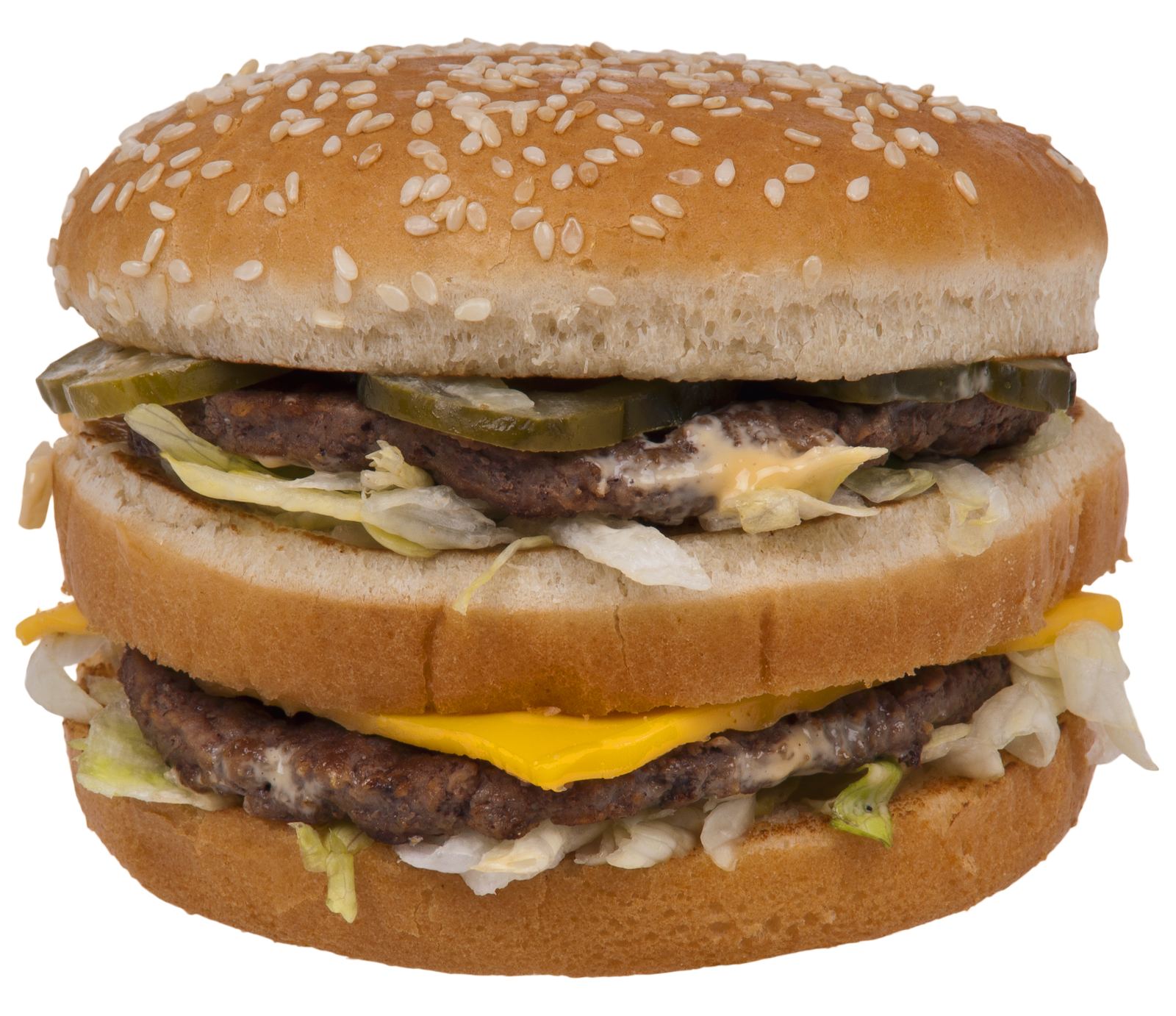
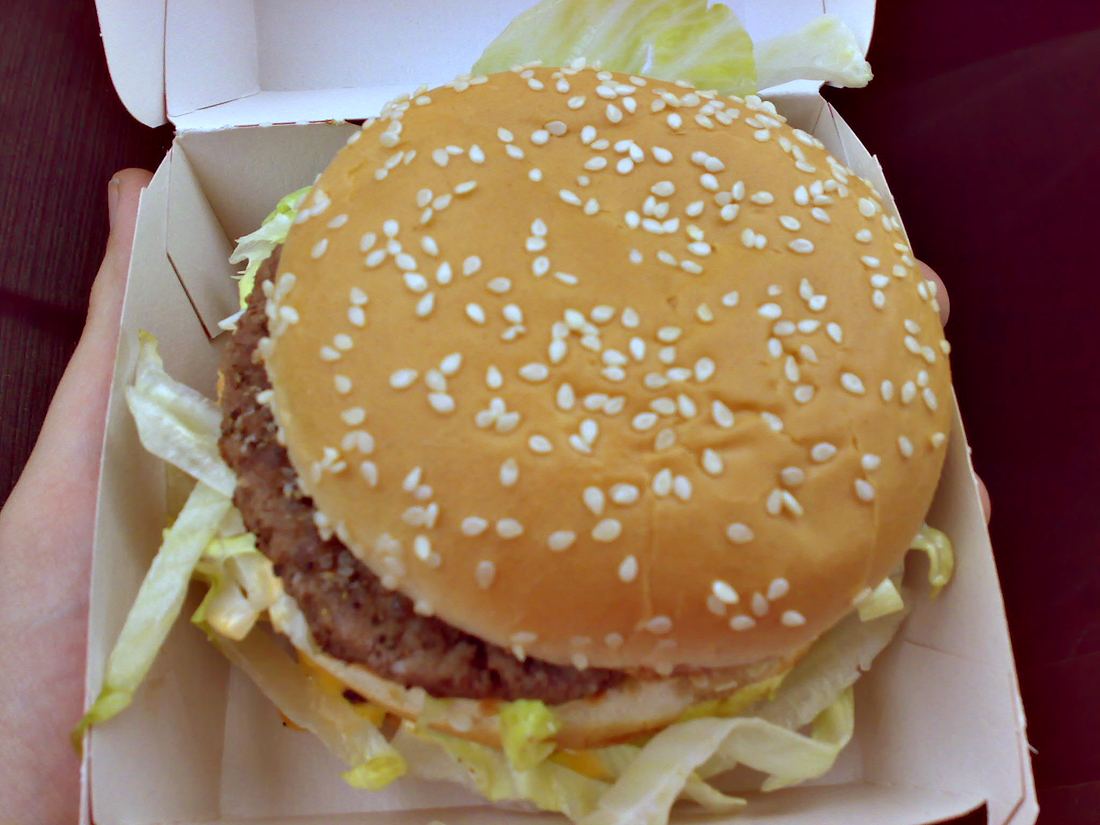
The three-layer build: Evan-Amos, CC0
Born in a franchise kitchen
The Big Mac did not come from head office. It was created by Jim Delligatti, who ran McDonald's restaurants around Pittsburgh, to compete with the double-decker burgers of a rival chain. It went on sale in Uniontown, Pennsylvania, on 22 April 1967 for 45 cents, and it was so popular that it reached every US McDonald's in 1968.
Before it became the Big Mac it was briefly called the Aristocrat and then the Blue Ribbon Burger. Both names flopped. The name that stuck was suggested by Esther Glickstein Rose, a 21-year-old advertising secretary at the company.
What is in it
A Big Mac is built from two beef patties of about 45 grams each, a slice of processed American cheese, shredded iceberg lettuce, pickles, minced onions and the famous special sauce, all stacked on a three-piece sesame seed bun. The middle bun, called the club layer, keeps the two halves from sliding apart.
The special sauce is often compared to Thousand Island dressing: creamy, tangy and slightly sweet, with bits of pickle relish. In 2018 the company said it had removed some artificial preservatives from the sauce.
The nutrition picture
In the United States, a Big Mac has about 580 calories, around 34 grams of fat and 25 grams of protein, according to figures reported from the company's own data. Recipes and sizes vary by country, so a Big Mac in Australia or Japan comes out a little different.
For context, 580 calories is close to a third of the 2,000-calorie daily reference used on US nutrition labels. Adding fries and a regular soft drink can push a meal past 1,100 calories, so many people split fries or choose water to keep the meal lighter.
A burger that became a measuring stick
The Big Mac is so standard around the world that The Economist magazine uses its price to compare the cost of living in different countries, in a tool called the Big Mac Index.
Pennsylvania even has a Big Mac Museum, opened in 2007 in North Huntingdon to mark the burger's 40th birthday. Few sandwiches can claim a museum of their own.